


How to Build Rest into a Busy Schedule


Science shows sustained high performance hinges on healthy rest. This goes beyond improving your sleep hygiene and extends to your daily habits around breaks, disconnecting and boundary setting. Rest can take many forms and in the face of a busyness-obsessed world, we need to consciously build these into our lives to ensure our health and wellbeing.
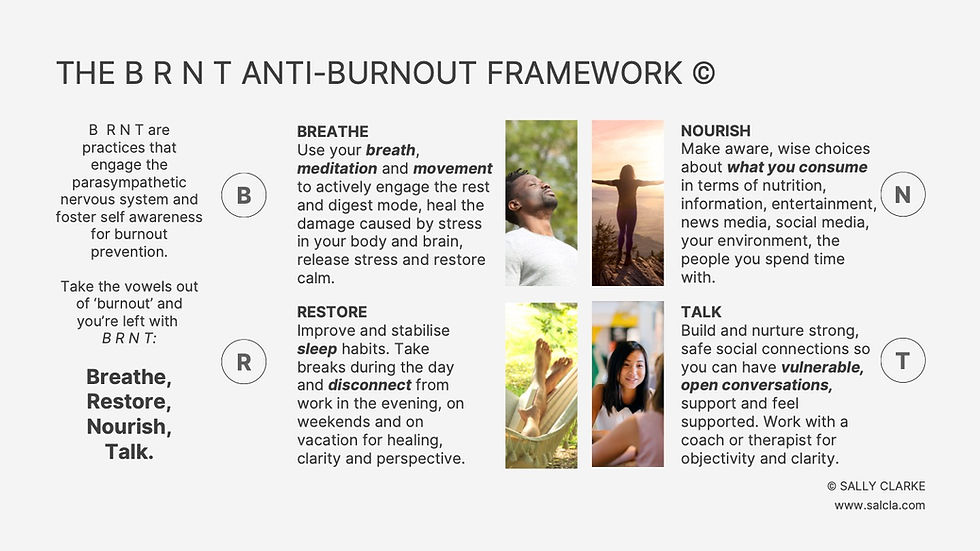
Rest forms a key second part of my burnout and prevention framework: B R N T. And it doesn't have to mean massive overhaul of our lives: sometimes, small practices done consistently have the most impact.
Here are 8 examples of what Rest can look like for busy professionals.
1. Declare Digital-Free Zones
Our devices demand attention, but you don't always have to give it. Declare your first 60 minutes awake a 'digital-free' sanctuary. Before checking any screens, spend this time on yourself – reading, meditating, or simply enjoying your coffee. Then, commit to powering down all devices 60 minutes before lights out for a calmer, less stimulated wind-down.
2. Engineer Micro-Breaks
Stop the back-to-back, lurching from one meeting into the next madness! Schedule a non-negotiable 5-minute physical break after every virtual meeting or 55-minute work block. Set a phone alarm as a gentle nudge. Use this time to stand up, stretch your body, get water, or simply look out the window. It’s essential mental, emotional and physical recovery time.
3. Reclaim Your Lunch Break
Your lunch break isn't just for eating – it's for resetting. Every day, commit to taking a full 30-minute break AWAY from your desk. Block this time in your diary. Step outside for a brisk 15-minute walk, or find a quiet spot to eat mindfully. No emails, no scrolling – just genuine disconnection to clear your head.
Leaders: think of implementing a fixed lunchtime in your organisation (e.g. 12-1pm) during which no meetings can be scheduled.
4. Build a Sacred Sleep Routine
Your brain does its best repair work while you sleep. Begin your dedicated 60-minute 'power-down' routine every night before your target bedtime. This means dimming the lights, putting away all screens, and engaging in a calming activity like reading a physical book or gentle stretching, perhaps with a cup of herbal tea. Treat this time as sacred: your treasured time to reconnect with yourself.
5. Weekend Work Blackout & Holiday Protocol
To truly recharge, you need dedicated, work-free time. As often as possible and at least once a month, from Friday evening at 5 PM until Monday morning, commit to a strict 'work-blackout' period. No checking emails, no work calls, no project updates. For holidays, plan a full digital disconnect: delegate tasks, set robust out-of-office replies, and then completely sign out of work platforms. Embrace total unplugging for genuine restoration.
6. Schedule 'White Space' in Your Calendar
It’s not 'doing nothing'; it’s nurturing growth. Actively block out 30 minutes in your calendar, at least twice a week, as 'White Space'. Treat this as a non-negotiable meeting with yourself. Use it for reflection, creative thinking, or simply allowing your mind to wander without agenda. No tasks, just space. Be mindful not to let tasks and meetings to accidentally creep in and take over this precious priority.
7. Daily Mindful Minutes
Even a single minute of intentionally harnessing your ‘rest and digest’ parasympathetic nervous system can shift your entire day.
Implement a 'Mindful Minute' three times a day. This might be 60 seconds of deep breathing before your first meeting (or anytime you’re waiting for others to join an online meeting), truly savouring your afternoon tea, or simply noticing three things you can see, hear, and feel around you. Set a reminder on your phone for 3 regular moments each day.
8. Engage in a Restorative Hobby
Recharge your creative and emotional batteries. Schedule 30 minutes, 3 times a week, for a 'Joy Activity' – something you do purely for pleasure, with no screens and no expectation of productivity. Whether it's playing an instrument, sketching, gardening, or building a jigsaw puzzle, engaging in an activity that sparks genuine interest and requires focus (but isn't work!) is a powerful form of mental and emotional restoration.
Need help embedding these practices, or ideating your own in your team or organisation? I can help! Reach out today.
Comments